How do I know the water in my attic is from a roof leak and not a plumbing line?
Look at where the staining starts. Roof leaks almost always begin high, near a rafter, valley, vent pipe boot, or chimney flashing, and travel downward along framing before dropping onto insulation. Plumbing leaks usually start at a fitting in a wall or ceiling cavity below the attic, and the wet area is more concentrated. If your Britton Ridge home has a second-floor bathroom directly under the wet spot, suspect plumbing. If the wet area lines up with a roof penetration or a recent hail or wind event, suspect the roof. Our techs use moisture meters and thermal cameras to confirm the source before any demo begins.
What does attic water damage actually do to my house?
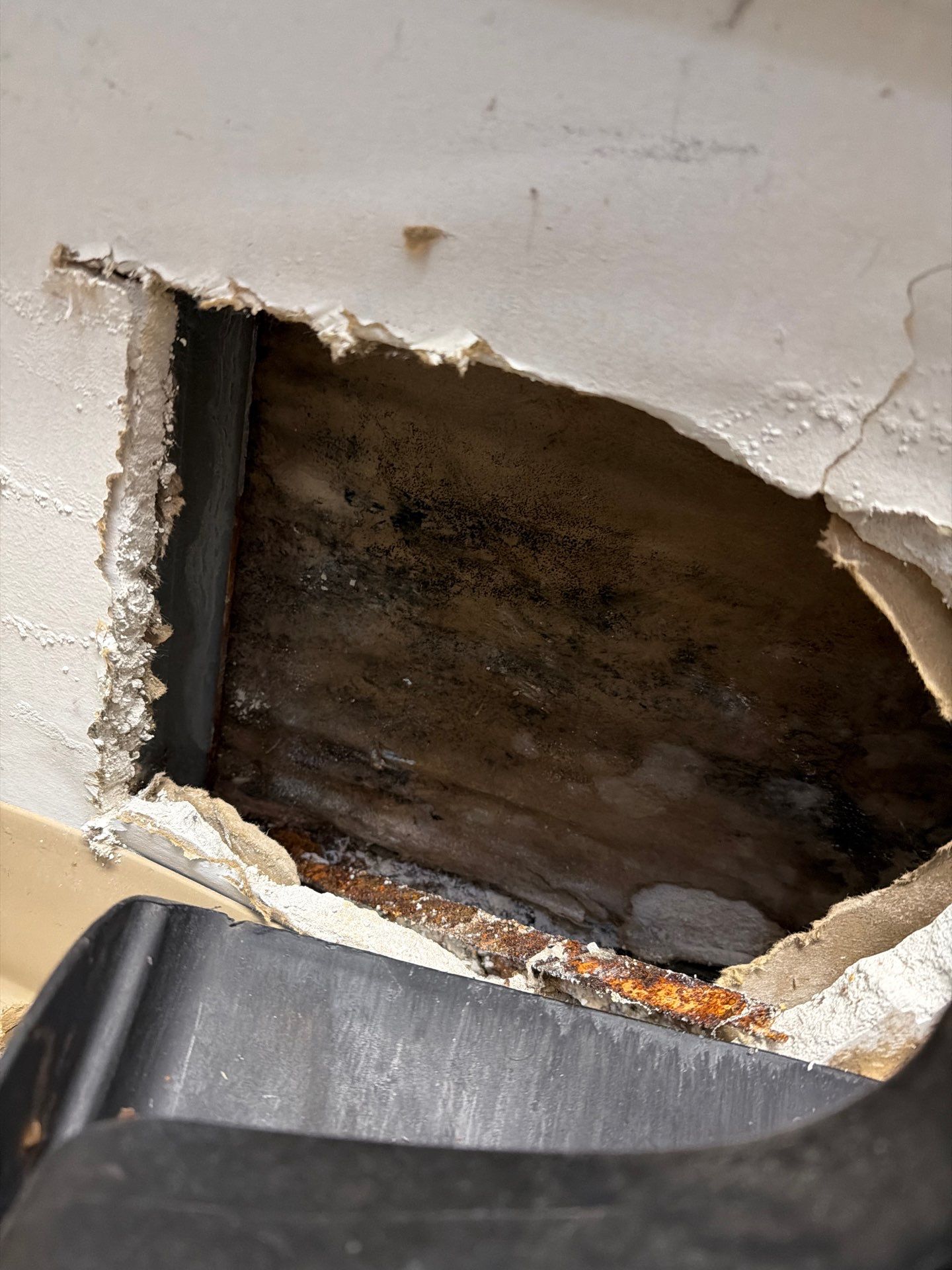
More than most homeowners expect. Wet blown-in insulation loses its R-value almost immediately, so your heating and cooling bills climb. Saturated rafters and decking can begin showing surface mold within 48 to 72 hours in warm weather. Drywall ceilings below the attic absorb water through the paper face, then sag, crack, or release in sheets. Recessed light cans and bath fan housings fill and short out. If the leak has been slow and chronic, you may also see darkened framing, rusted nail heads, and a sour smell that gets stronger when the attic heats up in afternoon sun.
There are also less visible consequences. Wet OSB decking begins to delaminate and lose holding strength for roofing nails, which means the next windstorm can lift shingles in places that were previously secure. Ductwork running through the attic can corrode at its seams, and the insulation wrapping flex duct mats down and stops performing. In homes with knob and tube or older cloth wiring, prolonged moisture in the attic is a real fire concern that should be flagged to an electrician before drywall goes back up.
Does homeowners insurance cover roof leak water damage?
Usually yes, when the leak is sudden and accidental, like a storm pulling shingles off or a tree limb puncturing the deck. Most policies cover the resulting interior water damage even when they exclude the roof repair itself if the roof was already worn. They typically do not cover damage from long-term neglect, like a leak that has been dripping for two years. When we arrive, we document the source, take moisture readings, photograph everything, and write our scope in the language adjusters expect. That documentation is the difference between a smooth claim and a denial.
What does the restoration process look like start to finish?
After the initial inspection, we tarp or temporarily patch the roof if it is still leaking, then move into containment so debris and spores do not migrate into your living space. We remove wet insulation, pull down failed drywall, and set air movers and dehumidifiers sized to the cubic footage of the space. Daily moisture readings track progress. Most attic dryouts run three to five days. Once readings are within four percentage points of unaffected wood, we move into reconstruction: insulation, drywall, paint, and any trim or fixtures. If mold was present, we follow the steps in our mold after water damage guide before we close anything back up.
What should I do in the first hour after discovering the leak?
Start by moving anything valuable out of the rooms directly below the wet area, especially electronics, paper records, and upholstered furniture. Cut power to any circuit feeding lights or fans in the affected ceiling, since water and live fixtures do not mix. If the rain is still active and you can safely access the attic, lay a tarp or plastic sheeting under the drip to channel water into a five gallon bucket. Take photos of every angle, including timestamps if your phone supports it, because your adjuster will ask for before images. Then call Britton Ridge Water Restoration so we can get a crew rolling while the damage is still fresh and easier to dry.
Can I just dry it out myself with a box fan?
For a small, clean spot caught within hours, sometimes yes. For anything covering more than a few square feet, or anything wet for more than a day, a box fan will move air without removing the moisture load from the space, and you end up with mold growing on dry-looking wood. Professional dehumidifiers pull 15 to 30 gallons of water per day out of the air. That is the part DIY cannot replicate.
Will my ceiling cave in?
It can, and we have seen it. A standard half-inch drywall ceiling holds roughly two to three gallons of water before the paper fails and the sheet drops. If you see a visible bulge or sag, do not stand under it. Place a bucket nearby, then poke a small relief hole with a screwdriver at the lowest point of the bulge to drain the water in a controlled way. That single step has saved a lot of Britton Ridge homeowners from a much larger drywall repair. If the ceiling has already failed, our ceiling water damage restoration process covers cleanup, drying, and rebuild.
Is wet insulation salvageable or does all of it have to come out?
Fiberglass batts can sometimes be dried in place if the wetting was brief and clean, but once blown-in cellulose or fiberglass has been saturated, it mats down and stays compressed even after it dries. At that point it is no longer functioning as insulation and it holds moisture against the framing. In most Britton Ridge attics we work in, we remove the affected insulation, dry the decking and rafters to IICRC S500 standards, then reinsulate after the structure is confirmed dry. We document everything for your insurance carrier.
How fast do I need to act on a wet attic?
Faster than you think. Category 1 clean water from a roof leak becomes Category 2 after about 48 hours as it picks up contaminants from dust, bird droppings, and decomposing organic material in the attic. Mold colonies can become visible in 72 hours on wet wood. If you can place a call within 24 hours of discovering the damage, you give yourself the best chance of avoiding mold remediation on top of water restoration. Our 24 hour water damage restoration response is built around that window.
How much does attic water damage restoration cost in Britton Ridge?
For a localized leak affecting a single bay of insulation and a small ceiling section below, most Britton Ridge projects land between 1,800 and 4,500 dollars for mitigation and basic rebuild. A larger event covering a quarter of the attic, with ceiling replacement in two rooms and mold remediation, more often runs 6,000 to 12,000 dollars. Full attic gut-outs after long-term leaks can exceed 18,000 dollars. Your deductible, the age of the roof, and whether framing needs sistering all move the number. We give written estimates before work begins, not after.
How do I keep this from happening again?
Schedule a roof inspection every fall and after any major storm, paying close attention to flashing around chimneys, skylights, and plumbing vents, since those are where most Britton Ridge leaks start. Keep gutters clear so water is not backing up under the shingle edge, and trim back branches that drag across the roof in wind. Inside the attic, leave the insulation alone but check twice a year for new stains on the underside of the decking. Catching a pinhole leak early is a fifty dollar caulk fix. Catching it late is what brought you to this page.